Buying a China-made e-bike in the UK: a checklist before you pay
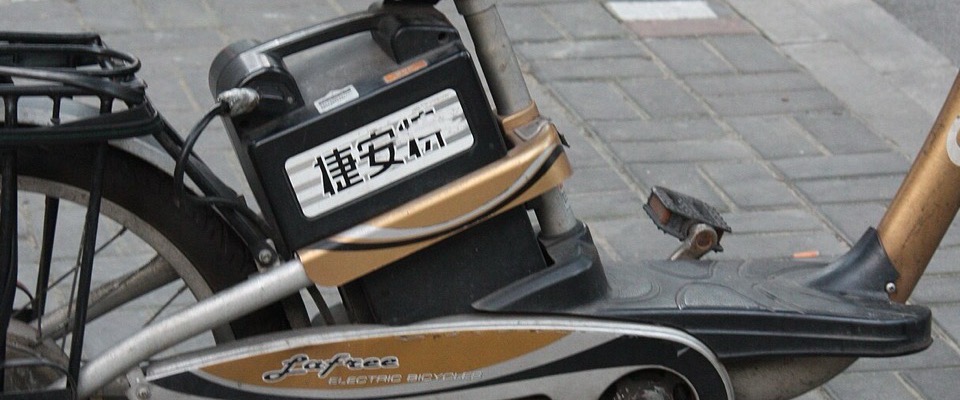
A large share of the e-bikes sold in Britain are designed or built in China, from well-known brands with UK distributors to bikes shipped straight from a factory listing. Many are excellent value. Some are not road-legal, hard to repair or supplied with chargers you would not want in your house. This checklist is about telling the difference before you pay.
1. Is it actually legal to ride here?
Start with the rules for electrically assisted pedal cycles (EAPCs) in Great Britain. A legal bike has a motor rated at 250W continuous, assistance that cuts out at 15.5mph, working pedals, and a plate or label showing the manufacturer, power and battery voltage or top assisted speed. Throttles are only acceptable if they work while pedalling or as a walk-assist up to about 4mph.
Be wary of listings that quote 500W, 750W or 1000W motors, top speeds of 25mph or more, or "unlockable" speed modes. These are often sold internationally where the rules differ. Ridden on a British road, they are unregistered motor vehicles. Our guide to the EAPC rules goes through this in more detail.
2. Battery and charger safety
The battery is the most expensive part of the bike and the part with the most potential to go wrong. Ask the seller:
- Which cells are used, and whether the pack has a battery management system (BMS) with protection against over-charge, over-discharge and short circuits.
- Whether the bike is built to the European e-bike standard EN 15194 (published in the UK as BS EN 15194), and whether it carries UKCA or CE marking.
- Whether the charger has a UK three-pin plug fitted at the factory, rather than a European plug with a travel adaptor.
- Whether replacement batteries and chargers are available, and what they cost.
A seller who cannot answer these clearly is telling you something. Never "upgrade" to a cheaper third-party charger or battery to save money.
3. The real cost of importing
If you are buying directly from overseas, the price on the listing is rarely the price you pay. Goods imported into the UK are subject to import VAT at 20 per cent, and the courier will usually add a handling fee to collect it. E-bikes from China may also attract customs duty and, in some cases, additional anti-dumping duties. Check the current tariff for your exact product before ordering.
Shipping lithium batteries is also restricted. Some sellers ship the battery separately, by sea, or not at all. Find out how your battery will arrive and how long it will take. A bike without a battery is just a heavy bicycle.
Buying from a UK-based seller of the same model often costs more up front but removes these surprises, and gives you UK consumer rights if something goes wrong.
4. Warranty that works in practice
A two-year warranty means little if a claim involves posting a battery back to another continent at your own cost. Ask:
- Who handles warranty claims, and are they in the UK?
- Does the warranty cover the motor, battery and controller, or only the frame?
- Who pays for return shipping on a faulty part?
- Will fitting it at a local bike shop void the warranty?
Get the answers in writing, by email, before you buy.
5. Spares and serviceability
Every e-bike will eventually need brake pads, tyres, chains, and possibly a new controller or display. Standard parts are a big advantage. Look for common brake mounts, standard wheel sizes, normal derailleurs and widely available tyre sizes. Fat-tyre bikes and unusual wheel sizes can be expensive to keep running.
For the electrical system, ask whether the motor, display and controller are from a recognisable supplier with parts available in the UK, or a proprietary system where only the original seller can help. It is also worth ringing a local bike shop before you buy. Many will service common systems; some will politely decline imported bikes they cannot get parts for. Motor layout affects this too; see hub motor or mid-drive for a hilly commute.
6. Weight, size and where it will live
E-bikes are heavy, typically somewhere between 20 and 30kg, and cargo or fat-tyre models can be heavier still. Think about the stairs to your flat, the space in your hallway and whether you will need to lift it onto a train or car rack. Check the frame size against your height, not just the product photos. If the bike has to share a train with you, our guide to folding e-bikes for the train-and-ride commute covers what to look for.
7. Questions to send the seller
Before paying, it is worth sending a short email along these lines:
Could you confirm the motor's continuous rated power, the maximum assisted speed as supplied to the UK, whether the bike has a throttle and how it operates, the battery's voltage and capacity, whether the charger has a UK plug, and who handles warranty claims for UK buyers?
Clear, consistent answers are a good sign. Vague replies, or answers that contradict the listing, are a reason to keep looking.
The short version
A China-made e-bike can be a smart buy for a UK commuter. Make sure it is a legal EAPC, that the battery and charger meet recognised standards, that you know the full landed cost, and that someone in the UK can fix it when something wears out. Get those four right and the country of manufacture matters far less than the quality of the seller behind it.
This article is general information, not legal or professional advice. Rules change; check GOV.UK and manufacturer guidance for your specific situation.