Hub motor or mid-drive for a hilly commute?
If your commute includes a proper climb, motor layout matters more than almost any other spec on the listing. Both hub motors and mid-drives can get you up a hill, but they do it in different ways, wear different parts and suit different riders. Here is how to choose without paying for capability you will never use.
Same legal power, different delivery
On a road-legal e-bike in Great Britain, the motor is limited to 250 watts of continuous rated power and must stop assisting at 15.5mph, whichever layout you pick (our plain-English guide to the EAPC rules covers the details). So the difference on a hill is not raw power. It is how efficiently that power reaches the road and how the bike responds to your own effort.
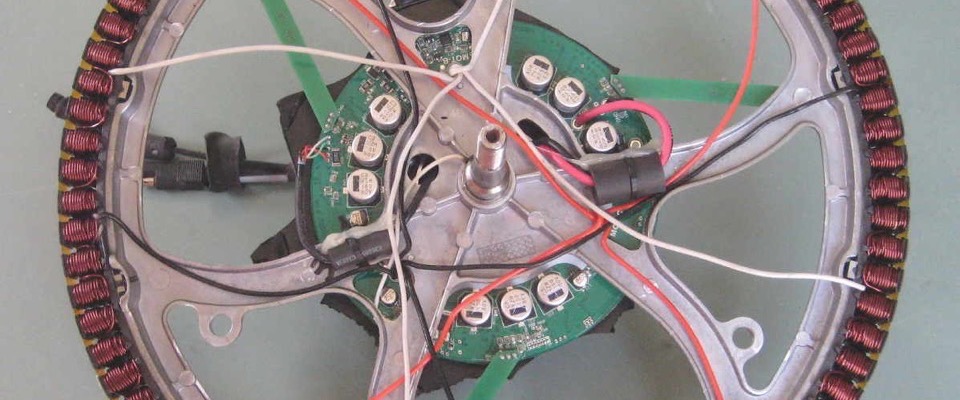
A hub motor sits inside the wheel hub, usually at the rear on commuter bikes, sometimes at the front on budget and conversion models. It turns the wheel directly. A mid-drive sits at the cranks and drives the chain, so its output goes through the bike's gears just like your legs do.
Why gears matter on a long climb
Electric motors are most efficient within a certain range of speeds. A mid-drive can stay in that range on a steep hill because you shift down: the motor keeps spinning briskly while the back wheel turns slowly. That is why mid-drives feel strong and steady on long or steep gradients, and why they tend to run cooler doing it.
A hub motor has a fixed relationship with the wheel. As the hill steepens and your speed drops, the motor slows too and moves away from its sweet spot. On a short rise this hardly matters. On a long, steep drag, a hub motor can feel as though it is fading, draws more current from the battery and gets warm. Some controllers reduce power to protect a hot motor, which tends to happen near the top of the hill, exactly when you want help.
Geared hubs versus direct-drive hubs
Most commuter hub motors are geared hubs: small, light, with internal reduction gears that give better pulling power at low speeds and freewheel without drag. Direct-drive hubs are heavier and simpler, with no internal gears, and are less suited to slow climbing within a 250W limit. For a hilly route, a geared rear hub is the hub option worth considering.
The sensor matters as much as the motor
How the bike decides when to help is just as important on a climb. Cheaper bikes often use a cadence sensor, which switches assistance on when the cranks turn, regardless of how hard you push. Better bikes use a torque sensor, which measures pedal pressure and adds assistance in proportion.
On a hill, torque sensing feels natural: push harder and the motor responds straight away. Cadence sensing can feel lumpy, with a slight delay when you restart on a slope and surges when you ease off. Most mid-drives use torque sensors. Hub-motor bikes vary, and a hub bike with a good torque sensor can climb very pleasantly, so check this line in the spec before deciding on motor position alone.
Wear, maintenance and repairs
Because a mid-drive pushes its power through the chain, the chain, cassette and chainring wear faster than on an ordinary bike, especially if you shift under heavy load. Budget for drivetrain parts more often, and learn the habit of easing pedal pressure for a moment as you change gear. Some mid-drive bikes pair the motor with an internal gear hub or a belt to reduce this, though that adds cost.
A rear hub motor leaves the drivetrain to your legs, so chain wear is close to normal. The trade-off shows up at the roadside: removing a rear wheel with a motor cable, torque arms and axle nuts is fiddlier than a quick-release wheel, which makes fixing a puncture on a cold, dark evening slower. Puncture-resistant tyres are a sensible upgrade on any hub-motor commuter.
Parts availability is the other question. Big-name mid-drive systems are well supported by UK bike shops, but their motors, displays and batteries are usually proprietary. Many hub systems on imported bikes use generic components that are cheap to replace, but you may need to source them yourself. Our checklist for buying a China-made e-bike covers the spares questions worth asking before you pay.
Cost, weight and handling
Hub-motor bikes are generally cheaper, and conversion kits almost always use hub motors. A mid-drive bike costs more up front, but you usually get a frame designed around the motor and a lower, more central weight that makes the bike easier to handle when climbing out of the saddle or manoeuvring at low speed.
A rear hub puts weight at the back wheel, which you notice when lifting the bike onto a rack or carrying it up steps. A front hub can spin the wheel on wet or loose surfaces when climbing, which is worth knowing if your route includes a steep, greasy lane in winter.
So which suits a mixed town-and-hills commute?
Choose a mid-drive if:
- Your route has long or steep climbs that you ride every day.
- You want the most natural, bike-like feel and are happy to look after the drivetrain.
- You carry heavy loads, such as a child seat or full panniers, uphill.
Choose a geared rear hub if:
- Your hills are short or moderate, with flatter stretches in between.
- Budget matters and you want lower running costs for chains and cassettes.
- You value simplicity, and the bike has a torque sensor rather than cadence-only.
Getting the best out of either on a hill
- Change down before the gradient bites, not halfway up.
- Keep your cadence up; spinning is easier on you and the motor than grinding.
- Use a higher assist level on the steepest section, then drop back to save battery.
- Keep tyres at the right pressure; soft tyres make every climb harder.
- In cold weather expect less range, and plan charging accordingly (see our winter battery care guide).
The short version
For a genuinely hilly daily commute, a mid-drive with a torque sensor is the most capable choice and the one that feels most like riding a bicycle. For moderate hills and a tighter budget, a geared rear hub with a torque sensor is perfectly capable, cheaper to run and easier on the drivetrain. Whatever you choose, test-ride it on a real hill before buying if you possibly can.
This article is general information, not legal or professional advice. Check manufacturer guidance and current rules for your specific situation.