UK e-bike law in plain English: what the EAPC rules really mean
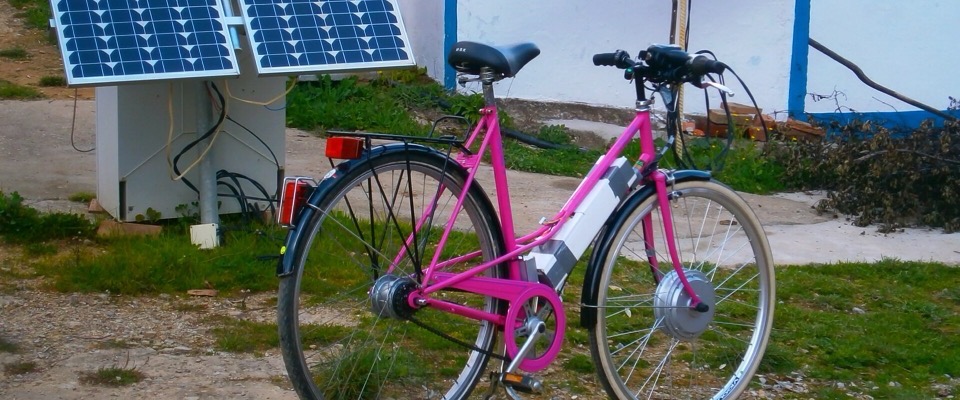
Most people who buy an e-bike in Great Britain never think about the law again, and for a properly built bike that is fine. The trouble starts with imported bikes, unlocked controllers and "off-road" modes, where a few small numbers decide whether you are legally riding a bicycle or a motor vehicle with no tax, insurance or licence.
The term that matters: EAPC
In Great Britain the law does not really talk about "e-bikes". It talks about electrically assisted pedal cycles, or EAPCs. If your bike meets the EAPC requirements, it is treated much like an ordinary pedal bike. You can ride it on roads and on cycle paths where cycling is allowed, and you do not need to register it, tax it, insure it or hold a driving licence.
If it does not meet the requirements, it is classed as a motor vehicle. At that point it would need to be type-approved, registered, taxed and insured, and the rider would need the right licence and a motorcycle helmet. In practice almost no imported "e-bike" that fails the EAPC test can be made road-legal in that way, so the realistic outcome is simple: it should not be ridden on public roads.
The checklist an EAPC has to pass
The core requirements are short. An EAPC must:
- Have pedals that can be used to propel it. A bike with token footpegs or pedals that are not connected to the drive does not count.
- Use a motor with a maximum continuous rated power of 250 watts. Peak power during a hill start can briefly exceed this; the rated figure is what counts.
- Stop assisting at 15.5mph (25km/h). You can ride faster under your own power or downhill, but the motor must cut out above that speed.
- Show key information, typically on a plate or label: the manufacturer, the motor's power output, and either the battery voltage or the maximum assisted speed.
Riders must be at least 14 years old. No helmet law applies, though wearing one is sensible.
Throttles: the most misunderstood rule
Many bikes sold online come with a thumb or twist throttle. Whether that is legal depends on how it works. A throttle that only provides assistance while you are pedalling, within the 250W and 15.5mph limits, is generally fine. A "start assist" or walk-assist mode that moves the bike up to around 6km/h (about 4mph) without pedalling is also permitted.
What is not permitted on a standard EAPC is a throttle that will happily carry you along at full assisted speed with your feet still. That kind of "twist and go" machine needs type approval as a moped-style vehicle.
Unlocked controllers and "off-road mode"
A popular selling point on some import listings is a hidden setting that removes the speed limiter or raises the power output. It is often described as being "for private land only". That description is doing a lot of work. The moment you ride that bike on a public road, cycle lane or shared path with the limiter removed, it is no longer an EAPC.
The same applies to aftermarket "speed dongles" that trick the motor's speed sensor, and to swapping in a larger motor or a higher-voltage battery. Each change can tip a legal bicycle into being an uninsured motor vehicle. If you are stopped, or worse, involved in a collision, the consequences fall on the rider, not the website that sold the kit.
Where you can ride
A compliant EAPC can go anywhere a pedal bike can: roads, cycle lanes, shared-use paths and bridleways where cycling is allowed. It cannot be ridden on the pavement, just as a bicycle cannot. Some private landowners, parks and canal paths have their own rules, so check signage locally. E-scooters are treated very differently from e-bikes; our article on private e-scooters and UK law explains why.
Northern Ireland has historically applied slightly different rules to e-bikes than England, Scotland and Wales. If you ride there, check the current position on NI Direct rather than assuming the GB rules apply word for word.
A quick self-check for your own bike
If you are not sure whether your bike is compliant, work through these questions:
- Does the motor label or spec sheet say 250W continuous, not 350W, 500W or more?
- Does the assistance stop at roughly 15.5mph on a flat road? A bike computer or phone app will tell you.
- Does the throttle (if fitted) only work while pedalling, or only up to walking pace?
- Is there a plate or sticker showing the manufacturer, power and voltage or speed?
- Has anyone changed the controller settings, motor or battery since it left the factory?
If you answer "no" or "not sure" to any of the first four, or "yes" to the last, it is worth investigating before you next ride on the road.
Why it matters beyond a fine
Enforcement is patchy, and plenty of riders never meet a police officer. The bigger risk is a collision. Riding a non-compliant machine on the road means riding without the insurance the law requires for motor vehicles, and any resulting claim may land on you personally. Home and contents policies that cover a legal e-bike are also unlikely to pay out for a modified one, whether for theft or fire.
The good news: 250W and 15.5mph is plenty for a real commute with hills and headwinds, and staying within the rules means none of the paperwork.
This article is general information, not legal or professional advice. Rules change; check GOV.UK and manufacturer guidance for your specific situation.